Safety risks change as children grow up!
At each stage of your babies development new safety risks are presented. Children start to roll over, reach for objects, grasp, put objects in their mouth and may be sitting up. Before they are one year old, children sit up, crawl, pull themselves up to stand, take their first steps holding on and with a great sense of curiosity. This can bring with it a new area of safety issues.
Injuries are the leading cause of death and hospitalisation in Australian children. While children at all ages are at risk of injuries, babies and toddlers are particularly vulnerable in their first year of life. Most injuries that happen to children under 12 months old occur in the home, where they are likely to spend most of their time.
Click on the age bracket of your child for some details on what to expect at different ages, and how to keep them safe.
Now is the time to think about child safety issues, purchases and changes you will need to make to your home and environment to keep your baby or child safe as they grow.
- Purchase or hire a current approved Australian Standards child restraint which is less than 10 years of age. The law states babies must travel in an approved child restraint or there is a fine of $225 and a loss of 3 demerit points. Organise to have the restraint fitted or checked to ensure this is done correctly.
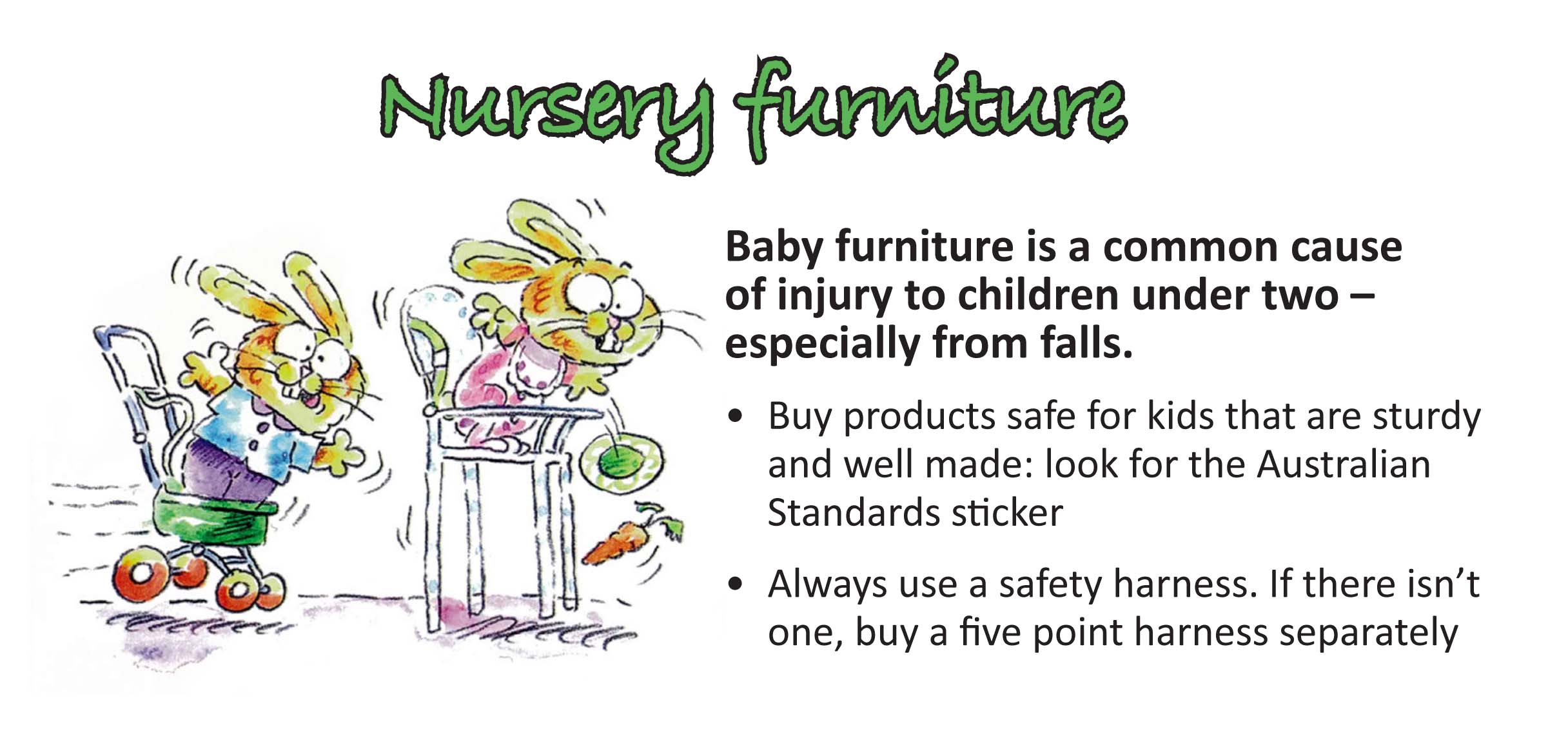
- Buy baby furniture products safe for kids and check safety features and standards on nursery furniture before purchasing.
- Ensure your swimming pool, garden pond, open water tanks or other watering holes around the home are fenced in with safety gates where appropriate.
- Devise a list of emergency numbers and keep them by the phone. Include your doctor, help lines and Poisons Information Centre (13 11 26).
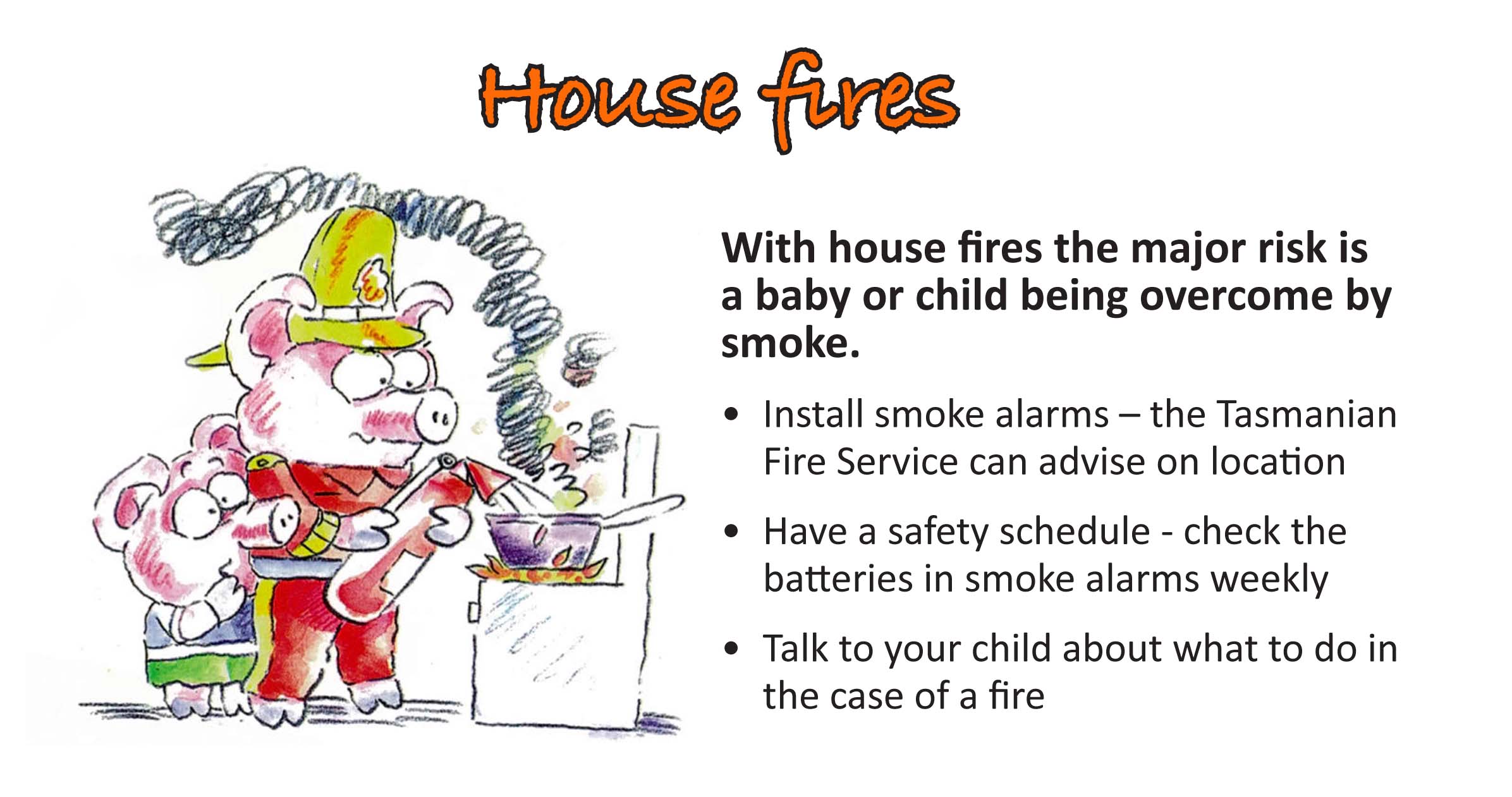
- Develop family emergency procedures and organise a fire safety exit plan. Install smoke detectors and heater guards.
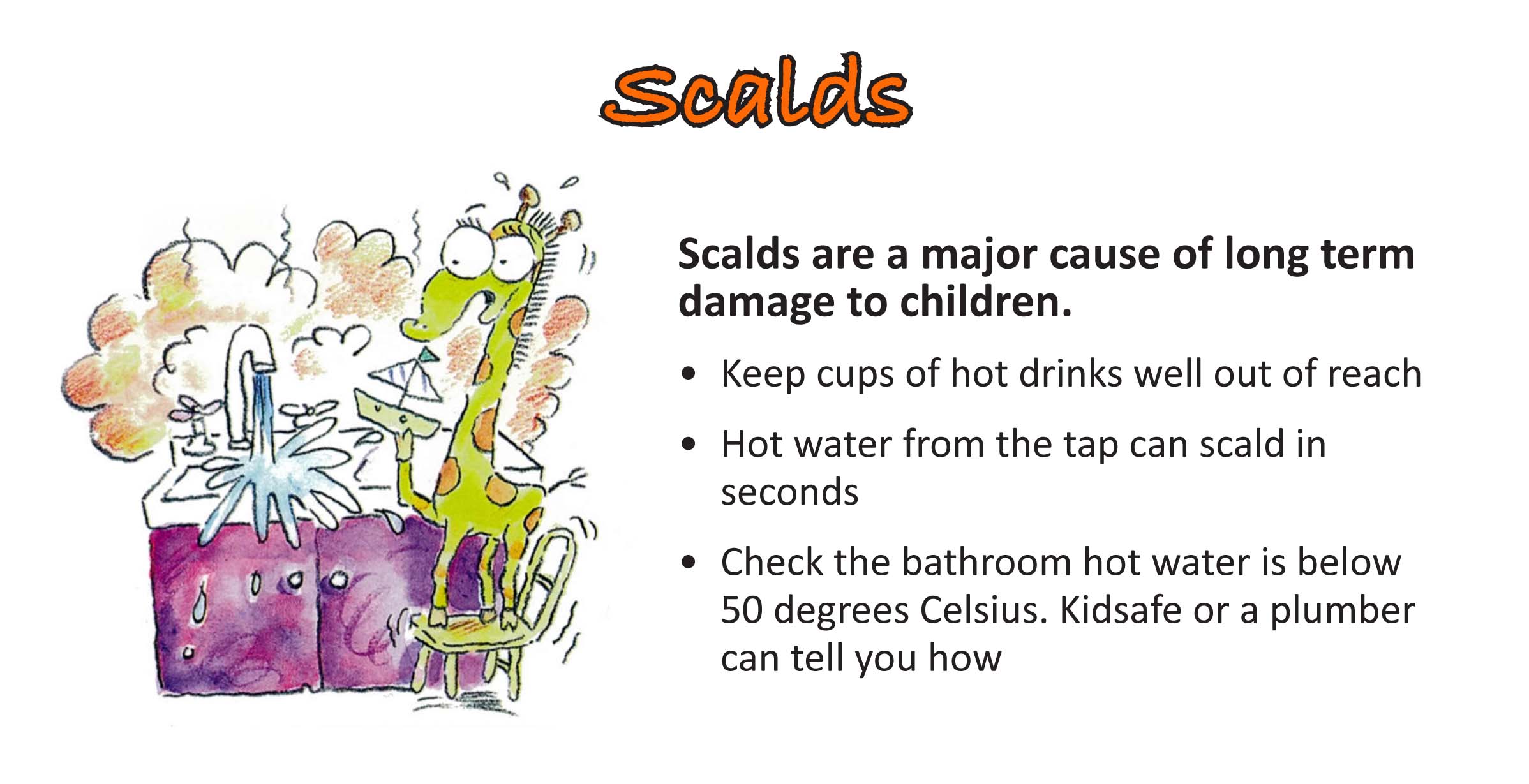
- Consider installing a tempering valve or tap covers to protect your family from hot water scalds. Ideally the delivery temperature should be 50oC. At just 60oC a baby can receive a full thickness burn in less than one second. Click here to learn more about burns.
Welcome to your new baby!
As a new parent, we know the first 6 months of your baby’s life can be a whirlwind of new information. One of the most important things to think about is safety and how to protect your baby from injuries at home, on the road and at play. The good news is that there are lots of ways you can watch out for baby and reduce the risk of injuries and Kidsafe Tasmania is here to support you!
Here are some simple safety tips to help you provide a safe environment for your baby’s first 12 months. Please also refer to our “Home Safety Checklist” to do a simple check around your home.
- Choose age appropriate toys without small parts
- Ensure you adjust your car restraint as your baby grows.
- Where possible purchase baby furniture that conforms to Australian Standards and always assemble to the manufacturer’s instructions.
- Choose a firm mattress that fits the cot snuggly.
- Never leave young babies and toddlers unattended on a bed, bench, change table or other baby furniture.
- Never place a baby on a waterbed or beanbag – small children have smothered.
- Keep hot things out of child’s reach and ensure tap hot water is safe at 50oC.
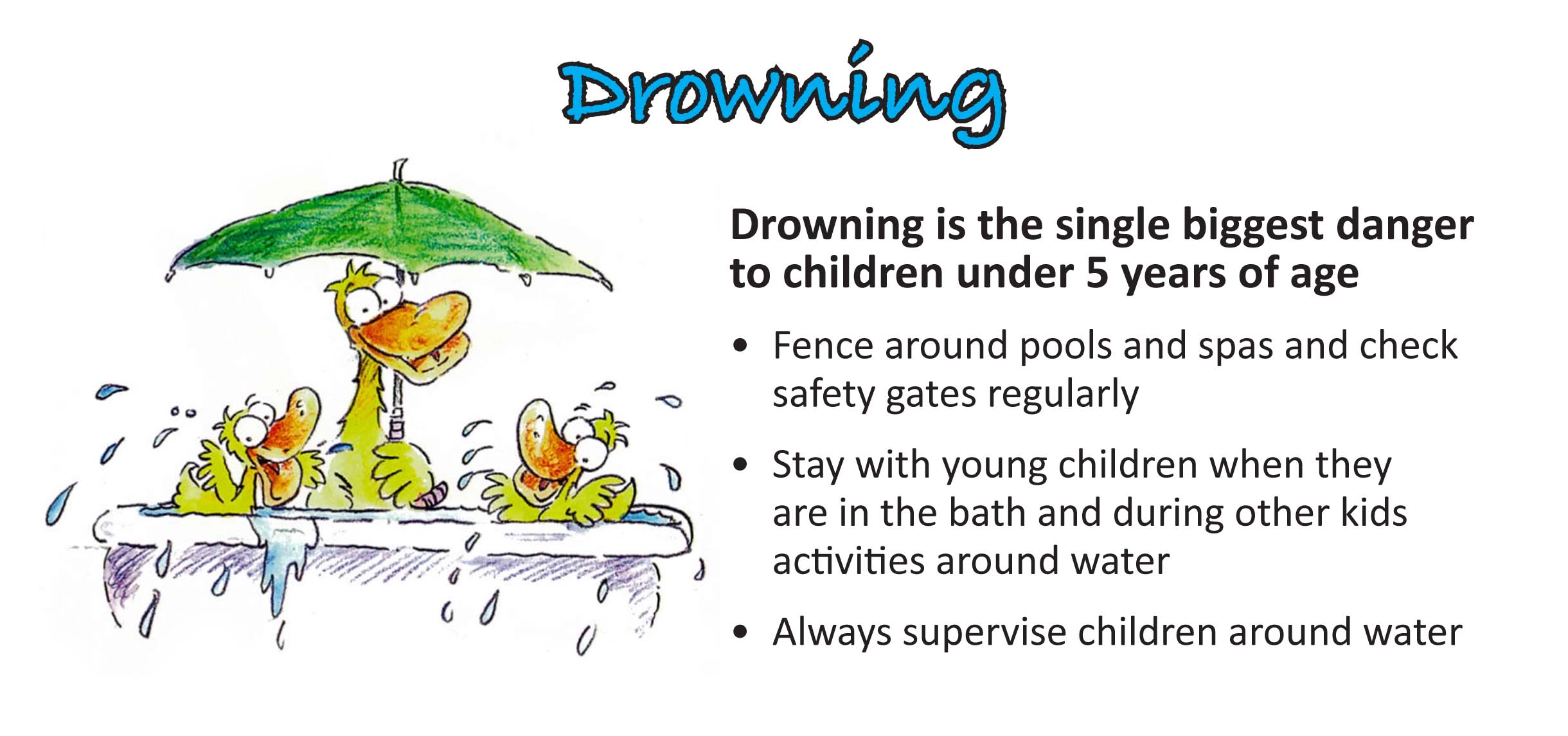
- Always supervise your child around water. A child can drown in as little as 5 cm of water
- Ensure swimming pools are properly fenced and safety gates close properly.
- Remove ribbons, cords and small objects from your child’s reach to prevent strangulation and choking.
- Have emergency phone numbers saved to your phone.
Some information is included below on creating a safe environment for baby and reduce the risk of injuries.
Kidsafe WA have produced a useful booklet to assist new parents when your baby first comes home.
Click here to download booklet.
To learn more about change tables, click here.
To learn more about helping infants sleep safely, click here.
To learn more about the safety of baby slings and carriers, click here.
The ACCC has commenced an education campaign aimed at raising awareness about the potential dangers of infant inclined products such as rockers, bouncers, and on propped items.
Reports indicate 151 babies in Australia have died in these products – that place an infant’s head above a horizontal position pose serious safety concerns, particularly if used for sleep. Sleeping on an incline increases the risk of sudden death for infants from: rolling into a position that blocks the airways, dropping their head onto their chest, which restricts their breathing.
For more information on keeping baby safe, click here go to the ACCC website.

This period of development sees children sit up, crawl, pull themselves up to stand, take their first steps holding on and with a great sense of curiosity. This can bring with it a new area of safety issues.
- Ensure the use of harnesses on baby furniture such as highchairs, strollers and for shopping trolleys.
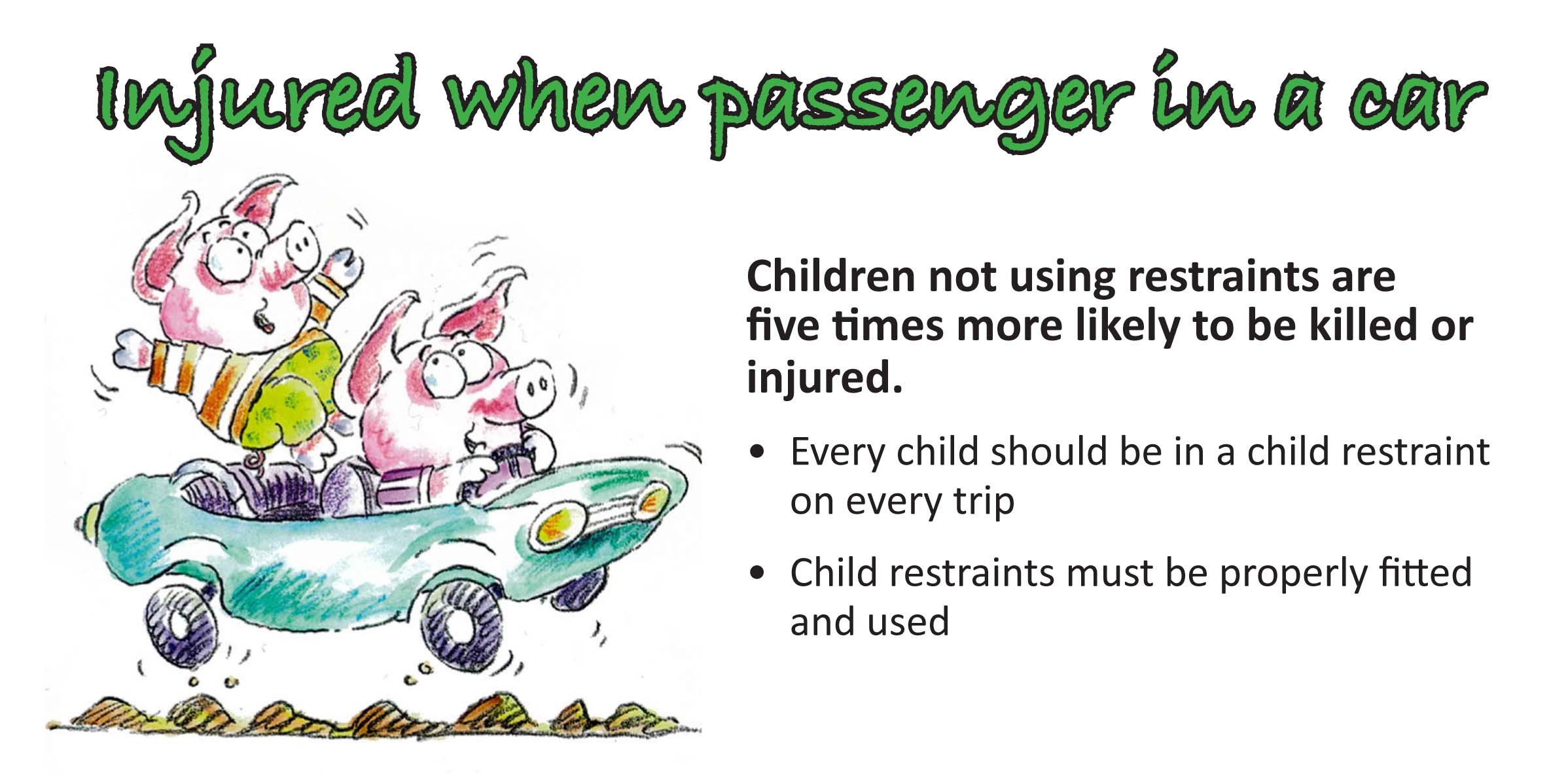
- Always use an Australian Standard child restraint on every trip in the car.
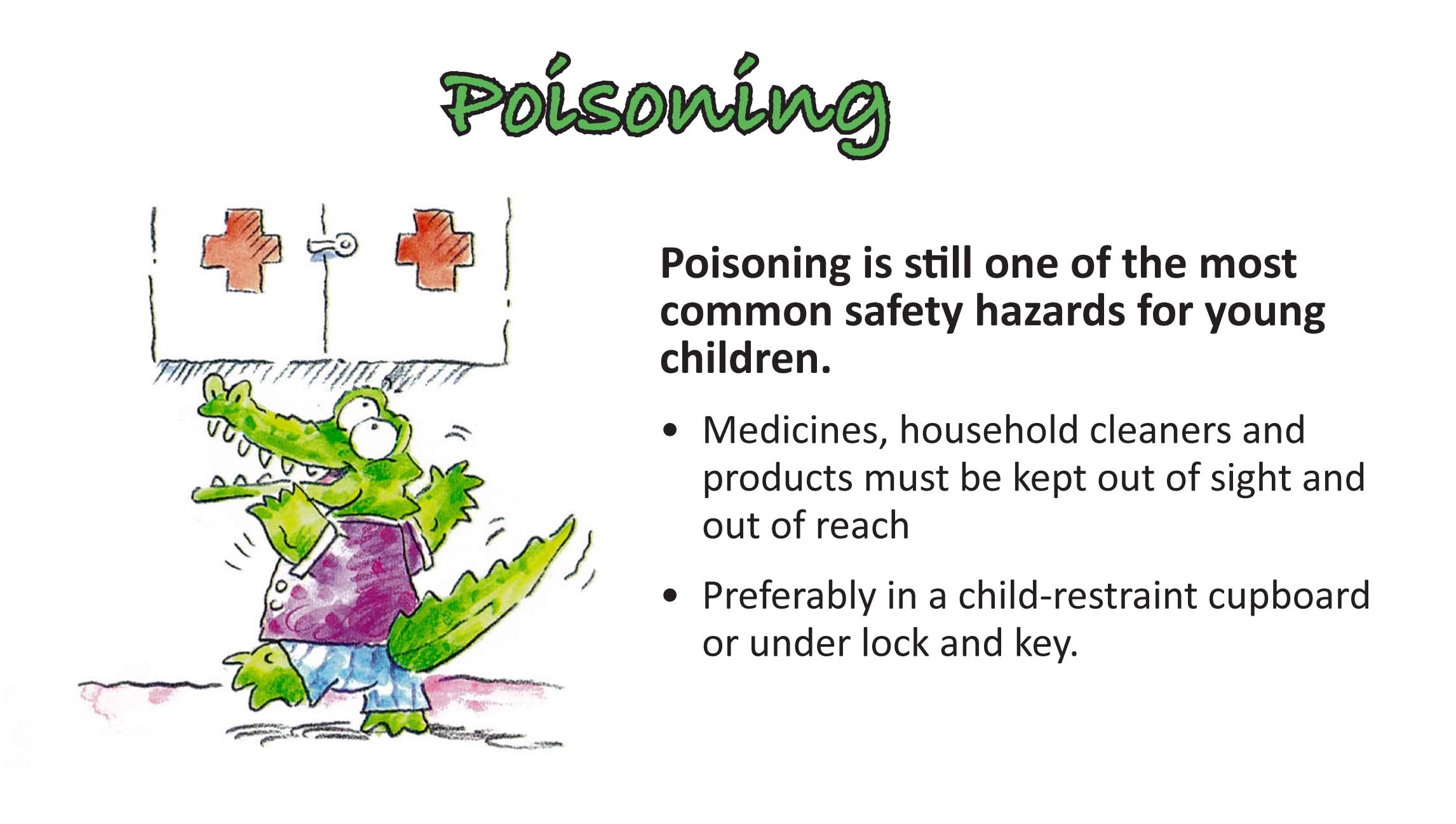
- Ensure all poisons are out of sight and out of reach of children.
- Children can drown in 5cm of water. Fish ponds, buckets of water and open drains, pools and spas can be a safety hazard for children.
- Check power points are covered and sharp corners are cushioned.
- Keep cigarettes, matches and lighters out of reach and out of sight.
- Install safety barriers on stairs and areas out of bounds.
Between one and three years children are very mobile walking, climbing, can turn knobs, dials and taps and imitative play, and before long they become highly active: running, jumping and climbing. They are adventurous and imitate adults and other siblings.
- Water is a particular danger at this age. Ensure the pool or spa is isolated by a four sided fence with a self closing safety gate, there are resuscitation instructions and safety signs by the pool and children are always supervised anywhere near water
- Empty the wading pool or bath immediately after use. A child can drown in 5cm of water.
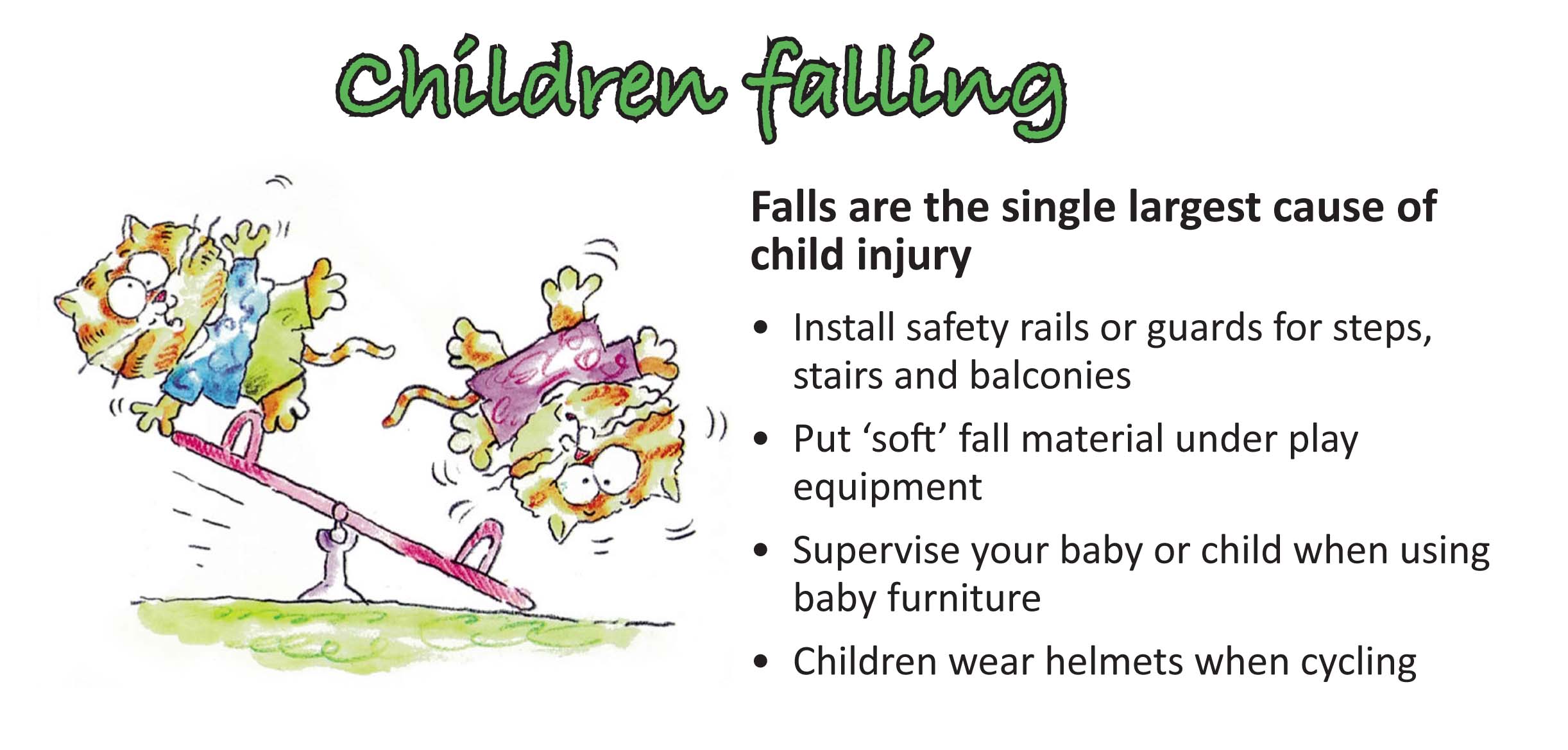
- Ensure play equipment has suitable impact absorbing surfacing under and around the equipment.
- Ensure all medications, cleaning products and hazardous substances are locked up out of sight and out of reach including dishwashing liquid or powder which can cause serious burns to the mouth and throat of a child. Look for cleaning products safe for children.
- Teach children to sit quietly to eat. Avoid foods such as peanuts or hard chunks of food that may cause choking.
- Guards for heaters and fires should be attached to the wall and choose low fire danger/fire safe nightwear .
- Install guards on stoves with saucepans handles turned to the rear.
- Ensure that children use child restraints at all times and the harness is adjusted to fit securely and is at the right height for the child.
- Get children out of the car on the kerbed side .
- Use harnesses in highchairs, prams and strollers and other baby furniture.
- Learn basic first aid and have a list of emergency numbers. Consider doing a kids first aid course.
- Ensure hot water is safe – install a tempering valve to 50 degrees or use tap covers.
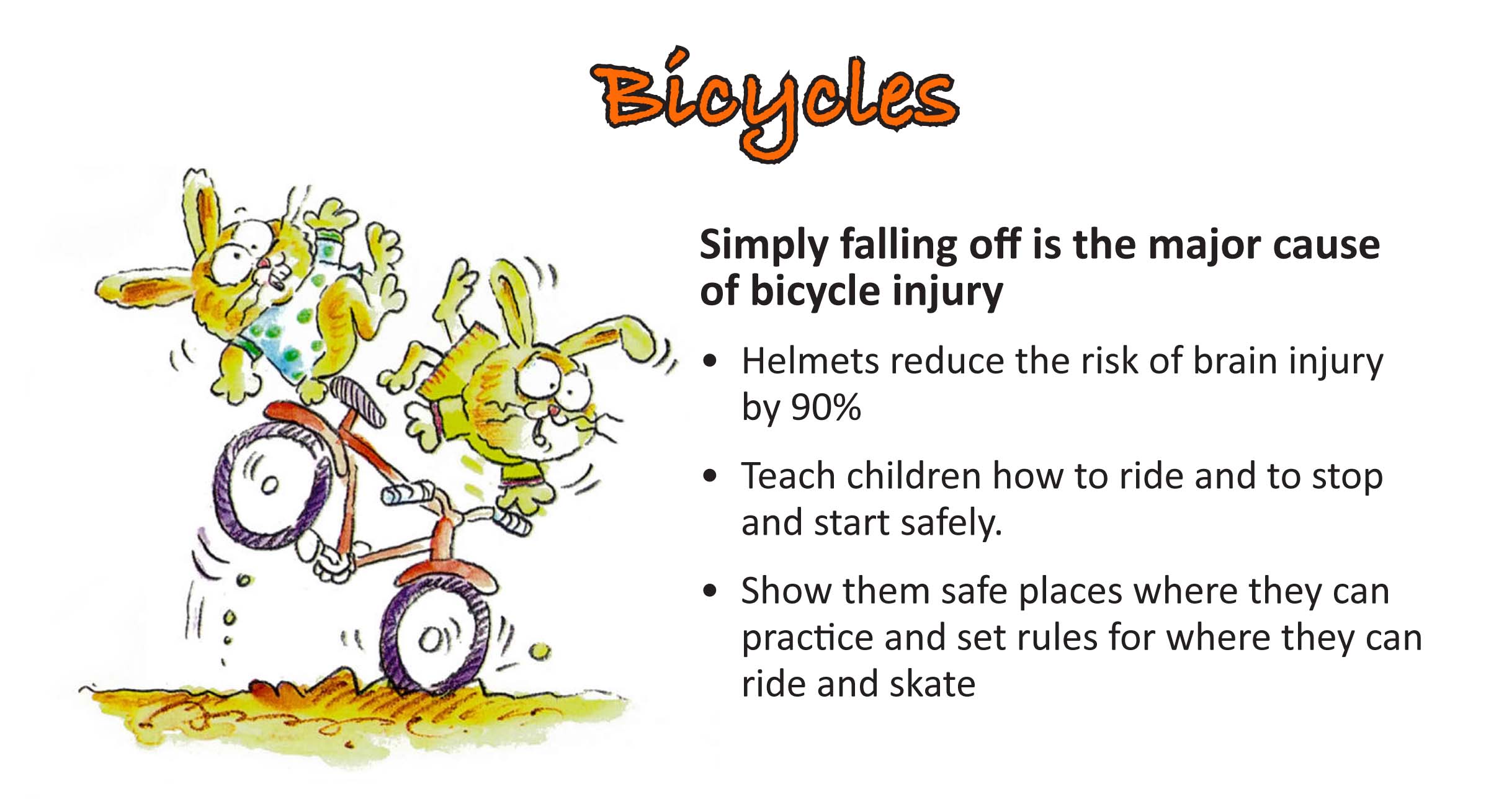
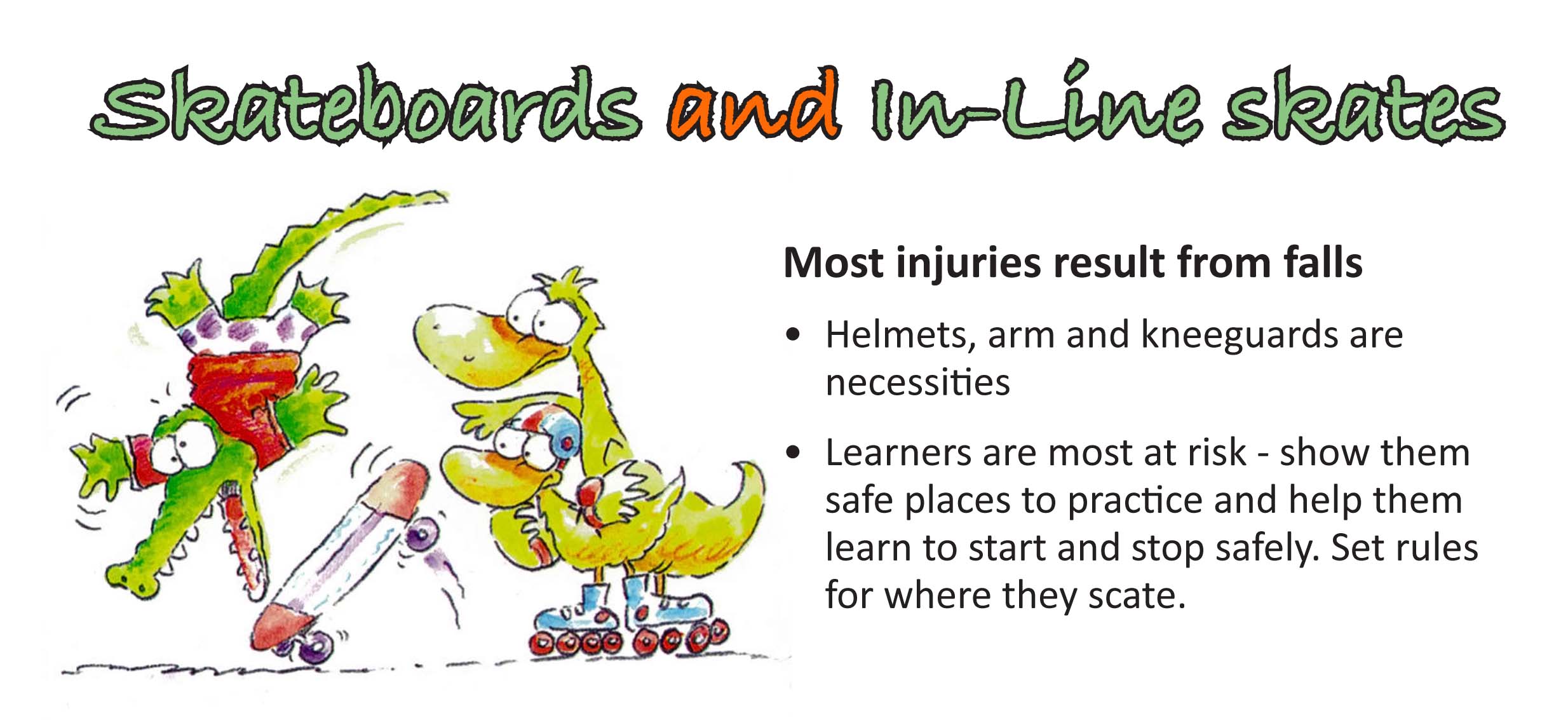
- Ensure children wear a well fitting, appropriate helmet when riding bikes or using skateboards and roller skates.
Children are highly active: running, jumping and climbing. They are adventurous and imitate adults and other siblings. Protect their safety – follow these child safety guidelines, make sure you have an up-do-date first aid kit on hand and consider doing a kids first aid course.
- Outdoor areas and kids activities areas should be safe from tripping or slipping hazards. If play equipment for kids is at a greater height than 500mm soft under-surfacing should be installed to a depth of 250mm.
- Provide a safe shady play area free from low branches and separate from the driveway.
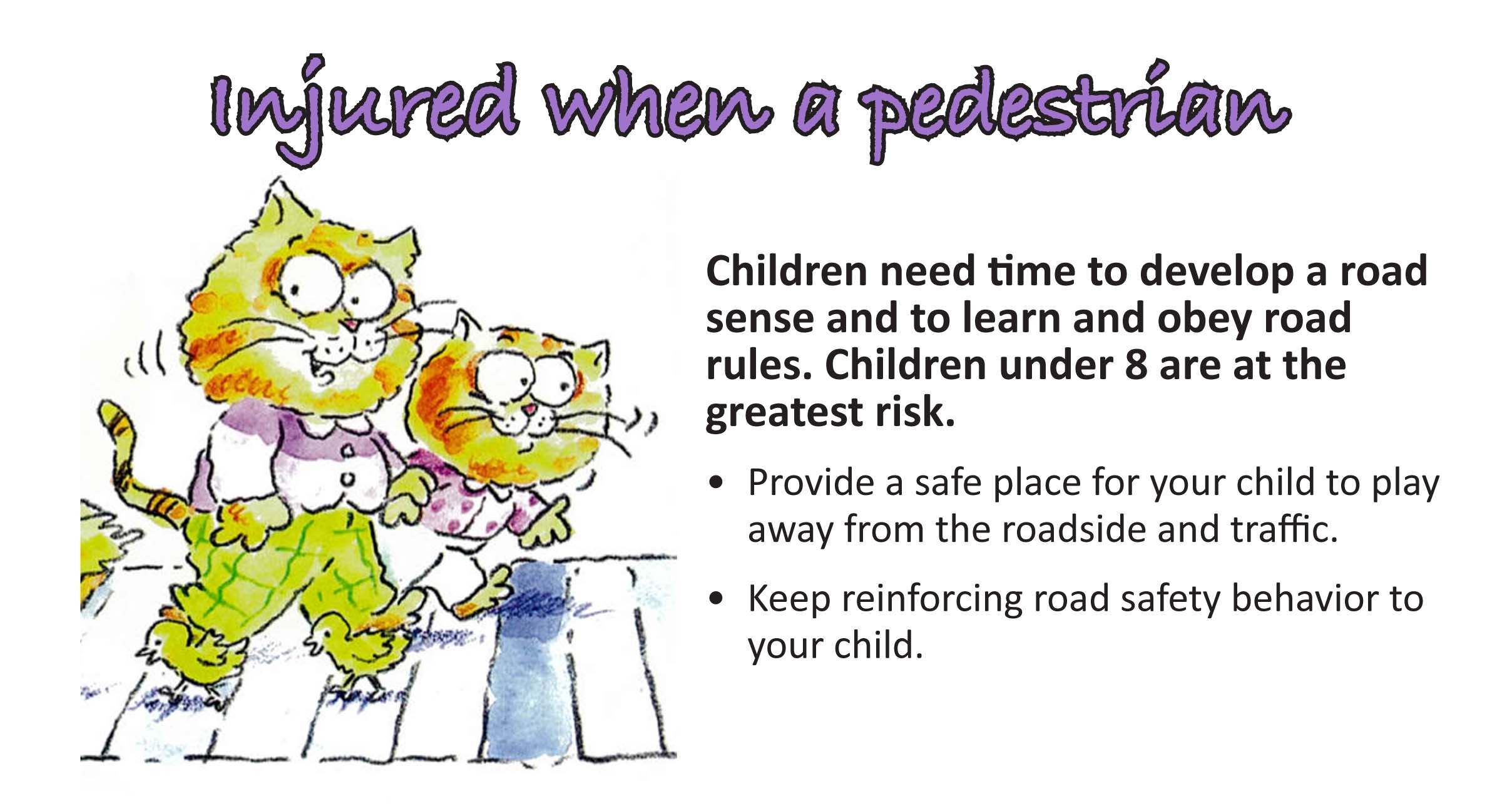
- Always supervise kids anywhere near the road and start to teach road safety, (stop, look, listen and think before crossing a road) hold hands near traffic, and always wear a helmet when using a bike.
- Use colourful stickers down low on glassed areas and use shatter resistant film or safety glass.
- Always supervise anywhere near water (pool or bath).
- Ensure play equipment has suitable impact absorbing surfacing under and around the equipment.
- Avoid direct sun exposure between 11am-4pm.
- Ensure all medications, cleaning products and hazardous substances are locked up out of sight and out of reach including dishwashing liquid or powder which can cause serious burns to the mouth and throat of a child. Look for child-safe cleaning products when shopping.
- Ensure children wear a well fitting, appropriate helmet when riding bikes or using skateboards and roller skates.
- Don’t forget electrical safety – use child proof safety plugs for unused power points.
The majority of injuries to children are unintentional; events that are often described as “accidents”. Unintentional injuries account for about 96% of injury hospital admissions and about 90% of injury deaths in children up to 14 years of age. Most unintentional injuries are both predictable and preventable and result from a lack of child safety.
Transport related injury and drowning are the leading causes of injury related death for children aged 1 to 14 years in Australia. Falls and transport related injury are the two leading causes of injury related hospital admission.
Here are the top 10 accidents for children and how you can prevent them:
Baby Safety Month
Initiated by INPAA (Infant& Nursery Products Alliance of Australia), the campaign aims to reduce preventable injuries by providing parents and carers with critical safety tips and a range of resources to assist with the
challenges of parenting.

Their website provides a lot of useful information and resources – click here to go to the website.
This initiative is part of a global effort and INPAA has partnered with the Juvenile Products Manufacturers Association (JPMA) in the USA, the Baby Products Association (BPA) in the UK and the European Nursery Products Confederation (ENPC) in Europe.
INPAA aims to use this promotion to improve safety awareness through the safe use of products, creating a safe environment for babies and empowering parents to feel confident in COVID times when safety information is sometimes more difficult to source.
To deliver this awareness campaign, INPAA, with the support of our Program Partners, will provide evidence-based solutions to safety and quality tips to reduce preventable injuries.
A key part of the campaign is to utilise a range of individual and company safety ambassadors who are leaders in their fields and who are strongly committed to INPAA’s ideals of improving safety in the nursery environment.
- Key Messages for our audience
Baby Safety Month is a global campaign to educate parents and caregivers about creating a safe environment for their baby. - Infant and Nursery Products Alliance of Australia (INPAA) is behind Baby Safety Month in Australia and is the industry voice providing the most accurate information on quality and safety for nursery products.
- The amount of information available for parents and carers is often overwhelming. The new Baby Safety Month magazine is free to download and is an excellent, practical guide, covering four major areas of infant safety:
Week 1 Safe Sleeping
Week 2 House Safety
Week 3 Out & About
Week 4 Finding Your Tribe - Knowing how to select the safest baby and nursery products and use them properly means you can enjoy the early days of parenting with less stress.
- It takes a village to raise a child and Baby Safety Month aims to connect a community that has been further challenged by the pandemic