
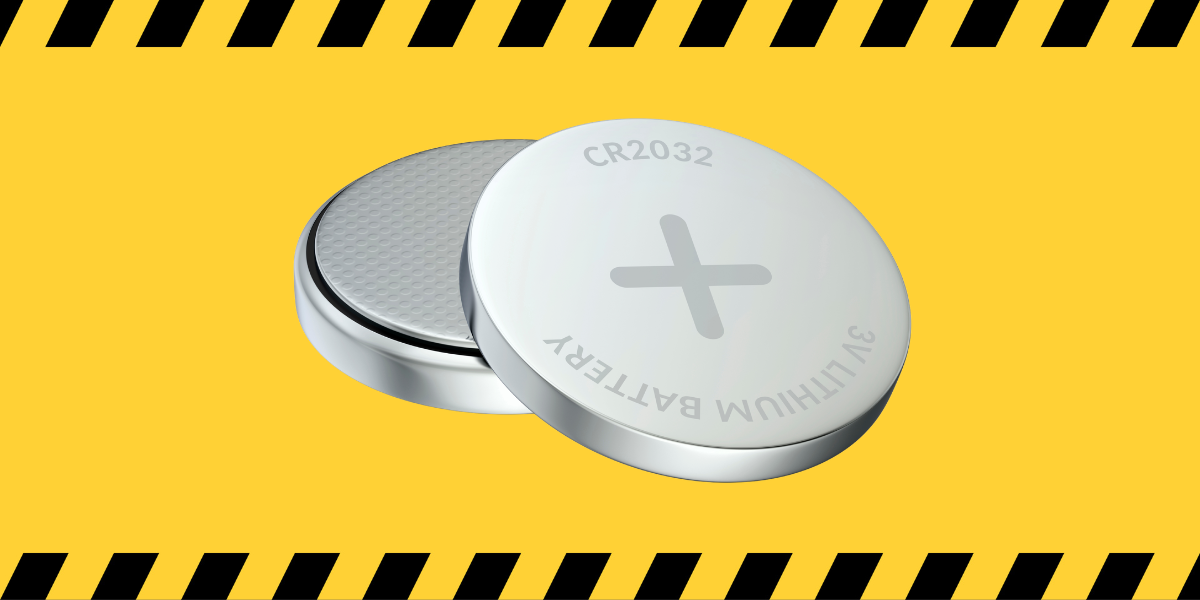
Button batteries are powerful coin-shaped batteries that are found in many household items, including flashing Christmas cards, children’s toys, or even dog toys. If ingested by a child, button batteries can become stuck in their throat and start to burn through their oesophagus in less than two hours, causing sever life-threatening injuries or death.
Babies and toddlers are most at rick of button battery-related injuries as they become more mobile and start to put things into their mouths. Many parents are unaware of the dangers of button batteries, and the symptoms of swallowing a button battery may be similar to other illnesses.

Safety steps to prevent button battery injuries:
- Identify devices around your home that may contain button batteries. This can include toys that flash or sing, remote controls, hearing aids, calculators and singing greeting cards.
- Ensure battery compartments are secure, regardless of whether the device intended for a child.
- Dispose of batteries safely at a battery recycling collection point.
- Place devices that contain button batteries out of reach and sight of children.
- Share this information with other parents and carers, friends and family members.
If your baby is not breathing, becomes limp, or unconscious, call 000.
If you think your child may have swallowed or inserted a button battery, call the 24/7 Australian Poisons Information Centre on 13 11 26 for fast, expert advice and seek immediate medical attention at a hospital emergency room. Do not let your child eat or drink and do not induce vomiting.
When you arrive at the hospital, let staff know that you suspect a button battery has been ingested.
From the time a child swallows a button battery they are ‘walking dead’.

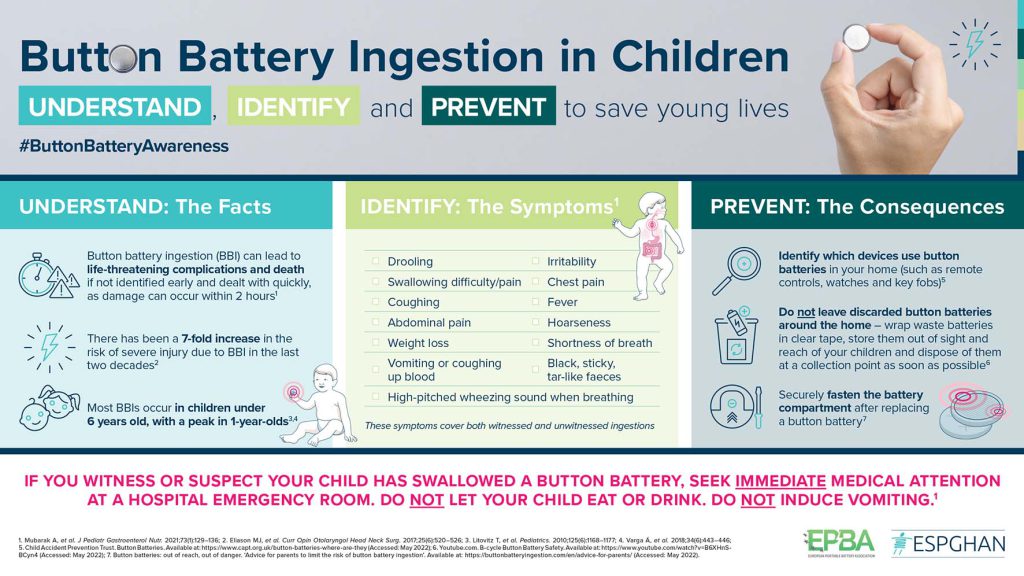
Understand the facts:
- Button battery ingestion (BBI) can lead to life-threatening complications and death if not identified early and dealt with quickly, as damage can occur within 2 hours.
- Most BBIs occur in children under 6 years old, with a peak in 1-year-olds.
- There has been a 7-fold increase in the risk of severe injury due two decades.
Identify the symptoms:
Symptoms of BBI include:
- Drooling
- Swallowing difficulty/pain
- Couching
- Abdominal pain
- Weight loss
- Vomiting or coughing up blood
- High-pitched wheezing sounds when breathing
- Irritability
- Chest pain
- Fever
- Hoarseness
- Shortness of breath
- Black, sticky, tar-like faeces
Prevent the consequences:
- Identify which devices use button batteries in your home. These could include remote controls, watches and key fobs.
- Never leave discarded button batteries around the home. Wrap waste batteries in clear tape and store them out of sight and reach of your children until you can dispose of them safely.
- Securely fasten the battery compartment after replacing a button battery.
- If you witness or suspect your child has swallowed a button battery, seek immediate medical attention at a hospital emergency room. Do not let your child eat or drink and do not induce vomiting.

In Australia, one child a month is seriously injured after swallowing or inserting a button battery, with some of them sustaining serious, lifelong injuries. In Australia and globally, there is a growing record of injuries and deaths from button batteries.
“Australia has become the first country in the world to have a button battery safety standard that applies across all consumer product categories,” ACCC Deputy Chair Delia Rickard said.
“The standards will enable the ACCC to take strong action to ensure that businesses sell safe products. We encourage all businesses to transition to the new standards as quickly as possible.”
All businesses that supply button batteries or products containing button batteries in Australia must comply with the standards.
Guidance material about the standards is available to make it easy for all businesses to understand their obligations and for consumers to know what they can expect when buying button battery products.
More information about the button battery related mandatory standards is available from the Product Safety Australia Website.
Background
The ACCC has worked with industry and state and territory Australian Consumer Law (ACL) regulators to improve the safety of button batteries and products that contain them for many years.
Regulators assessed products containing button batteries, and promoted information to assist suppliers to source safer products. The ACCC has engaged with suppliers for recalls of unsafe products that contain button batteries.
Regulators also undertook consumer education activities to raise awareness of the hazard of button batteries to consumers and business. The ACCC recently launched the ‘Tiny batteries – big danger’ safety campaign which included a short video describing the dangers of button batteries and explaining the importance of parents and carers keeping them away from children.
The issue of button battery safety is complex because mandatory safety and information standards for consumer goods with button batteries apply to a vast range of products, most of which are manufactured overseas and imported into Australia.
Button batteries are used in thousands of different products across many categories of consumer products. For some categories of consumer products, there are voluntary industry standards that include button battery safety requirements. The new mandatory standards have taken into account that some suppliers comply with voluntary industry standards that include acceptable button battery safety requirements. The regulatory burden of the new standards will be minimal for suppliers that currently adhere to these voluntary industry standards.
After broad consultation with national and international stakeholders in industry and medical professionals, the ACCC recommended that the Government adopt mandatory safety and information standards for button battery safety that apply to all consumer products sold in Australia.